
Manifesto(3);
III. The Questions
Beneath the surface of this conversation are questions that philosophy has been wrestling with for centuries. What makes them urgent now is that they suddenly have practical consequences.
The Sorites Paradox asks: if you have a heap of sand and remove one grain at a time, at what point does it stop being a heap? Applied to creative work: if you automate one element of the creative process, then another, then another, at what point does the output stop being “art”? At what point does it stop being “yours”? There is no clean line. And yet people on every side of this conversation behave as though there is one, and that they know exactly where it falls.
The Ship of Theseus asks: if you replace every plank of a ship one by one, is it still the same ship? Applied to AI-assisted creation: if an artist sketches a concept, uses AI to render it, paints over the render, uses AI to adjust the lighting, then manually fixes the composition, at what point in that chain did the work become theirs or stop being theirs? The answer changes depending on who you ask. None of them are necessarily wrong. That is precisely what makes this worth studying.
Mereological Nihilism, the philosophical position that composite objects don’t truly exist and only their fundamental parts do, forces an even more uncomfortable question. If a creative work is an arrangement of pixels, and the arrangement was determined by a model trained on millions of other arrangements, and the selection was made by a human who typed a sentence, what exactly is the “work”? Is it the pixels? The sentence? The selection? The intent behind the selection? Where does the art live?
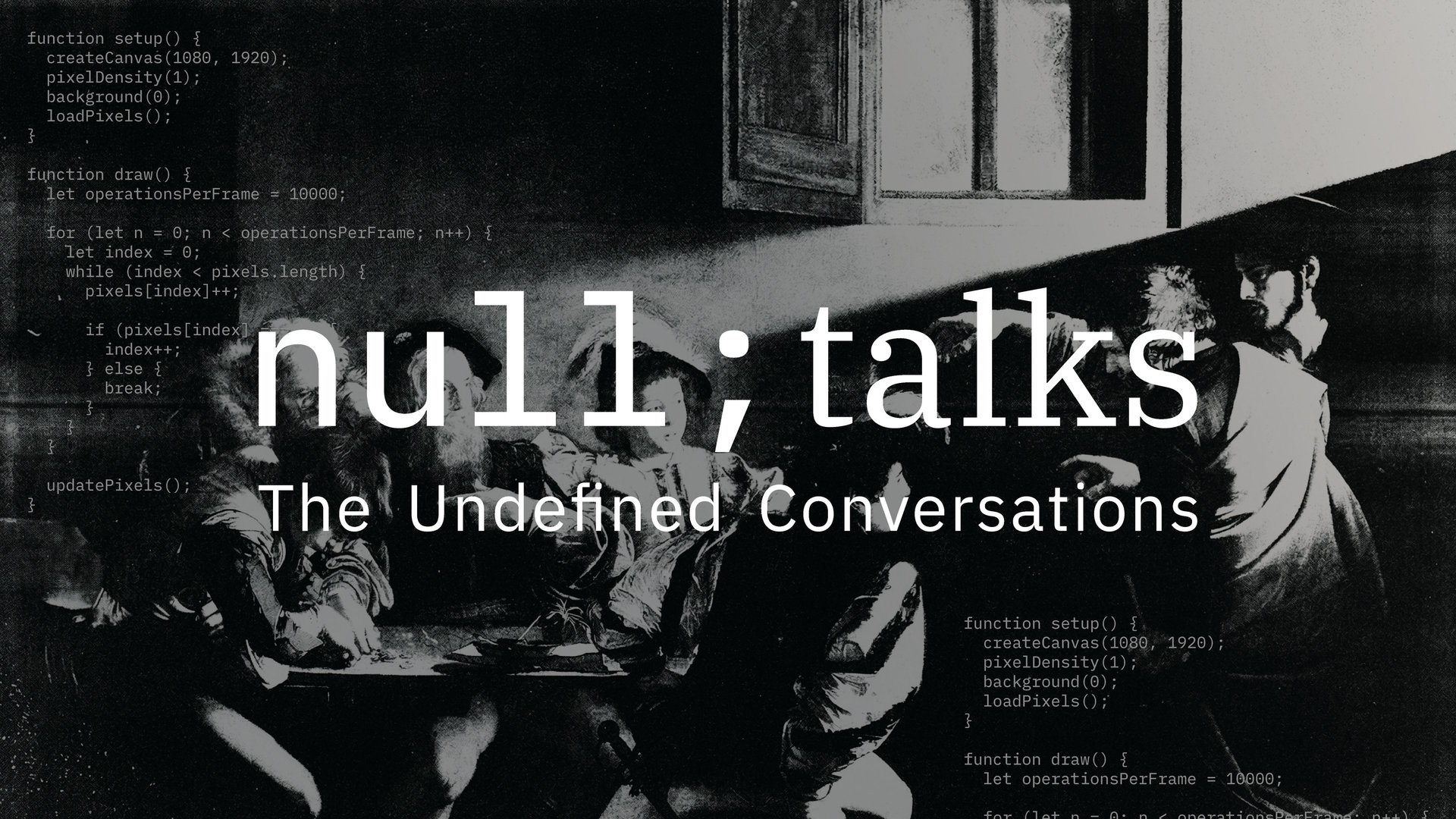
And then there is a thought experiment we call Generative Exhaustion. Imagine a program built in p5.js that generates every possible pixel combination within a 4×4 grid using only black and white. There are a finite number of combinations. The program would exhaust all of them in roughly twenty minutes. Every possible image within that context, including every abstract composition, every pattern, every accidental portrait, would exist.
Now scale the grid to 1080×1920 and replace black and white with the full RGB spectrum. The number of possible images becomes astronomically large. It would take longer than the life of the universe to generate them all. But they are all theoretically there, waiting inside the computation. Every image anyone could ever create within that resolution already exists as a possibility.
Does knowing that change anything? If everything you might dream up would eventually be generated by a brute-force algorithm, does that destroy the value of choosing to make it? Or does it prove that the value was never in the output, and was always in the choosing?
These are not rhetorical questions. They deserve study, evidence, and perspectives from people who have spent their lives thinking about art, technology, philosophy, and the spaces between them. That is exactly what we intend to do.
Join the conversation
Get thoughtful essays and talks straight to you